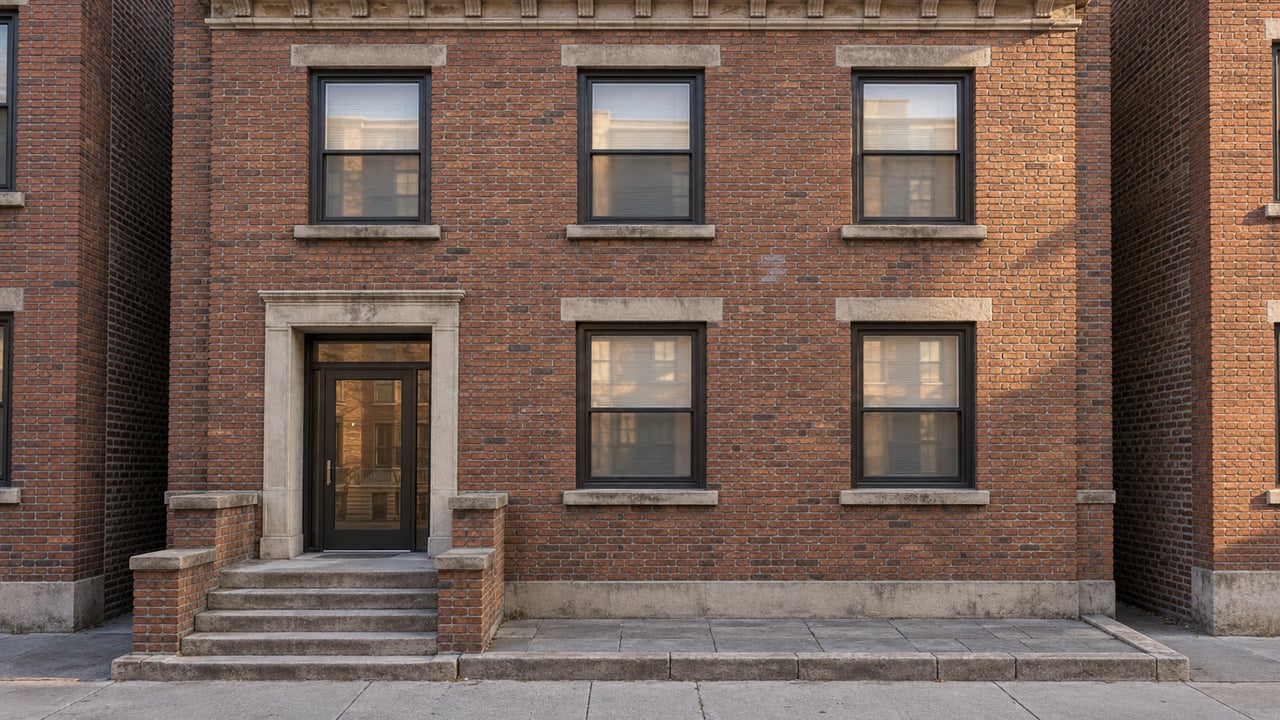
On April 15, 2026, West New York's Board of Commissioners adopted Ordinance #10/26. It lowers the most a landlord can raise rent on a rent-controlled unit in a 12-month period, for all causes combined, from 15% to 3%. Five months later, the Bureau of Labor Statistics reported that consumer prices in the New York-Newark-Jersey City area rose 4.3% in the 12 months ending August 2026. So a covered unit's rent can now rise more slowly than prices in the region. For a buyer comparing two-, three- and four-family houses, the question that now decides value is which side of Chapter 312 the building sits on.
The Formula Still Exists. The Ceiling Now Overrides It.
West New York's routine rent increase has long been tied to inflation. Under §312-3E, the allowable increase uses the change in the regional all-items Consumer Price Index, measured 90 days before a lease expires or renews, against the previous 12 months. That section was not repealed. A new limit now sits above it. The amended §312-19A in the town's rent control chapter reads:
"In all cases, combined rent increases for all causes shall be limited to an amount not to exceed 3% in any one 12-month period."
When regional inflation is below 3%, the cap has little practical effect. Recent readings have been above it. The BLS release for August 2026 put the 12-month increase at 4.3%, after 4.6% for the 12 months ending July 2026. BLS scheduled the September figure for October 14, 2026.
Here is a simple illustration using a hypothetical covered unit renting for $1,800 a month:
| Scenario | Annual increase | Rent after one year | Rent after five years |
|---|---|---|---|
| Increase matching the August 2026 regional CPI | 4.3% | $1,877 | about $2,222 |
| Increase at the new combined cap | 3.0% | $1,854 | about $2,087 |
The five-year column assumes prices keep rising at the August 2026 pace. Nobody can promise that. What the table does show is that when inflation runs above 3%, the gap between a covered unit's rent and its costs grows every year. Taxes, insurance and repairs are not capped.
The ordinance gives its own reason. It says that tying increases more closely to the cost of living "will promote housing stability, reduce displacement, and better protect tenants from sudden and excessive rent increases." Whatever a buyer thinks of that goal, it now sets the ceiling on the income from a covered unit.
Surcharges Now Fit Under the Same 3%
The word "combined" in §312-19A changes more than routine increases. Landlords have other ways to raise rent besides the annual CPI step. In December 2025, the Rent Control Board's agenda listed sewerage utility pass-along applications for several properties. The online code still shows a 12½% aggregate annual limit in §312-8J for hardship and capital-improvement increases. The newer §312-19A, though, caps all causes combined at 3% in any 12-month period. It also asks landlords to put every authorized increase into one annual notice, effective when the cost-of-living increase takes effect.
Read together, the text suggests that a capital improvement, a utility pass-along and the routine increase all draw on the same 3% each year. This matters most to buyers planning a roof, boiler or facade project with an increase in mind to help pay for it. How the Board treats a specific application is something to confirm with the Rent Control Office before you count on the money.
The Exemption Category Is Now Part of the Price
Chapter 312 covers rental housing unless an exemption applies. Having only two, three or four units is not an exemption by itself. Under the lower cap, where a building falls in §312-3B affects how its income can grow over a holding period. That is part of what you are paying for.
| Category under §312-3B | What the code says | What to verify |
|---|---|---|
| Owner-occupied two- and three-family | Exempt | Whether owner occupancy is documented, and how it applies after the sale |
| Owner-occupied four-family | Units exempt only after any tenant who lived there on or before April 20, 1994 moves out. Tenants who moved in later are not protected | Each unit's tenancy history |
| Ground-up new construction | Exempt for initial and all later rentals if construction began after October 1, 1995 | Building permit and construction dates |
| Rented condo or co-op units | Exempt if rented on or after August 1, 1995 with monthly base rent above $1,000 | Rent history for the unit |
| Substantially rehabilitated buildings | Exempt only under a narrow definition: at least 80% vacant as of September 1, 2010, with costs above the structure's equalized value as of October 1, 2009. Unrenovated units stay covered | Rehab records. Ordinary renovation does not qualify |
| Mixed-use, up to three apartments over one commercial use | Exempt only if the person running the commercial use lives in one of the units and holds 100% ownership, alone or with a spouse | Ownership structure and who lives there |
Owner occupancy carries the most weight here, and it also raises the most questions. The code exempts owner-occupied two-, three- and four-family dwellings, with the 1994 tenant condition attached to four-family buildings. A three-family that is exempt while the seller lives there can look different in a buyer's spreadsheet if the buyer won't live there. How the exemption applies to existing tenants after a sale depends on the specific facts. Take it to a real estate attorney and the Rent Control Office before you set a price.
Turnover Does Not Reset the Rent
In some markets, a tenant moving out gives the owner a chance to bring rent up to market. West New York's code has no general vacancy decontrol. Section 312-3G requires a new tenant to receive a statement of the prior tenant's rent and last increase. Section 312-18A defines lawful rent as the base rent plus authorized increases and surcharges, minus any ordered reductions. The landlord must file that prior-rent statement with the Board within 10 days of giving it to the tenant.
So a covered unit's rent history goes with the unit, and with the 3% cap each year's room to grow is small. Rents above the ordinary controlled level are possible only through Board or Secretary review of a written rental agreement under §312-26. That is an approval process, not an automatic step-up.
Multi-generational buyers should also know §312-31. It generally requires a covered vacant apartment to be rented and occupied within 60 days. It has its own exclusions for owner-occupied small buildings and for first rentals of new construction, and those are separate from the rent-control exemptions in §312-3. If you plan to hold a unit open for a relative, check how this section applies to the building before you make that part of the plan.
The Paperwork Deadline Was October 1
Section 312-28D requires landlords to file an annual registration statement by October 1. That date passed nine days ago, so a covered building in good standing should have its 2026 filing on record. The statement lists each unit, its room count, current base rent, the amount and date of the last increase, the lease expiration, services provided, and owner and managing-agent details. Any changes must be filed within seven days. The registration is a public document, available for inspection under the Town Clerk's procedures.
A practical order for collecting documents on a covered property:
- The most recent annual registration statement for every unit, plus earlier years if you can get them.
- Each rent increase notice and the calculation behind it. Increases require written notice at least one month before taking effect, a copy sent to the Board at the same time, and a notarized affidavit of service.
- Any Board-approved rental agreement, surcharge order or pass-along approval for the address.
- Prior-rent statements given to tenants who moved in recently.
- Confirmation of the current registration fee. The code says $10 a year, but the town's current Annual Rent Registration Statement form asks for $20.
The form also says a new owner should refile immediately after a change of ownership. That is a post-closing task to put on the calendar. Gaps in the record have consequences. Under §312-28F and G, if a landlord never registered, a tenant can establish the base rent with evidence of rent paid, and CPI increases are used for the unregistered years. On a unit with missing filings, the rent in the listing's pro forma may not be the rent the Board would treat as lawful.
The town's Rent Control page has landlord registration, annual registration, rental agreement and overcharge forms. It lists the Rent Control Office at 201-295-5290.
Plan for Slow Board Rulings
Any approval that has to go through the Rent Control Board depends on the Board meeting. The town's Board page reported that the June 15 and August 10, 2026 meetings were cancelled for lack of quorum. It later posted a notice and agenda for a September 14 meeting. The March 9, 2026 agenda included swearing in a replacement member and reappointments. For a buyer whose numbers depend on a pending surcharge application or a rental agreement review, two cancelled meetings in one summer show how a ruling can slip by months.
The 2024 changes are worth knowing too. Ordinance 23/24, adopted August 7, 2024, expanded the definition of rent to include charges for services tied to the housing space. It also capped late fees at $25 for payments up to 15 days late and $50 for payments more than 15 days late. A pro forma that counts service fees as income outside the rent should be checked against that definition.
If you're weighing a two-, three- or four-family in West New York and want help sorting out its exemption category and filing history before you make an offer, Scott Selleck and The Selleck Group can work through those records with you and help you decide which questions should go to the Rent Control Office and your attorney. Schedule a Consultation.
This article is general information, not legal, tax or financial advice. Consult a qualified professional about your situation.