A buyer touring a one-bedroom at Port Imperial this summer would have found a line buried in the listing description, easy to skim past between the panoramic pool deck and the 24-hour concierge: taxes on the unit are based on a PILOT abatement program. No dollar figure attached to the phrase. No expiration date. Just the four letters, sitting where most people expect a tax bill and finding a payment structure instead.
That sentence is the whole story, and almost nobody stops to read it twice.
What "PILOT" Actually Replaces
PILOT stands for Payment In Lieu Of Taxes. Instead of paying conventional property tax on an assessed value, the building's owner (and by extension, in a condo, each unit owner) pays a negotiated service charge to the town for a set number of years. New Jersey's Long-Term Tax Exemption Law allows these agreements to run anywhere from ten to thirty years, and municipalities across the state, including West New York, have used them for decades to make new residential construction pencil out for developers.
The mechanic that matters to a buyer is simpler than the legal language: the number on your first tax bill is not the number you'll be paying in year fifteen, or year twenty-five, or whenever the agreement runs out. It's a snapshot of wherever the building happens to sit inside a countdown that nobody prints on the listing sheet.
This Isn't Just a Port Imperial Story
It's tempting to file PILOT under "big waterfront tower financing," something that applies to Toll Brothers-scale developments and not much else. West New York's own ordinance record says otherwise.
Look at just the last few years of municipal ordinances. In 2022 alone, the town approved a PILOT for 582-586 66th Street, a PILOT for 6115-6119 Broadway, and a five-year tax abatement for 6108 Fillmore Place, alongside the larger Toll Brothers PILOT for the Port Imperial waterfront that the Board of Commissioners adopted on September 28 of that year. In 2024, a PILOT went through for 6116 Harrison Place. In 2025, at least five separate individual-property ordinances passed: PILOTs for 6009 Jefferson Street, 526 64th Street, 6123-6129 Park Avenue, and 524 64th Street, plus a five-year abatement for 304-306 61st Street.
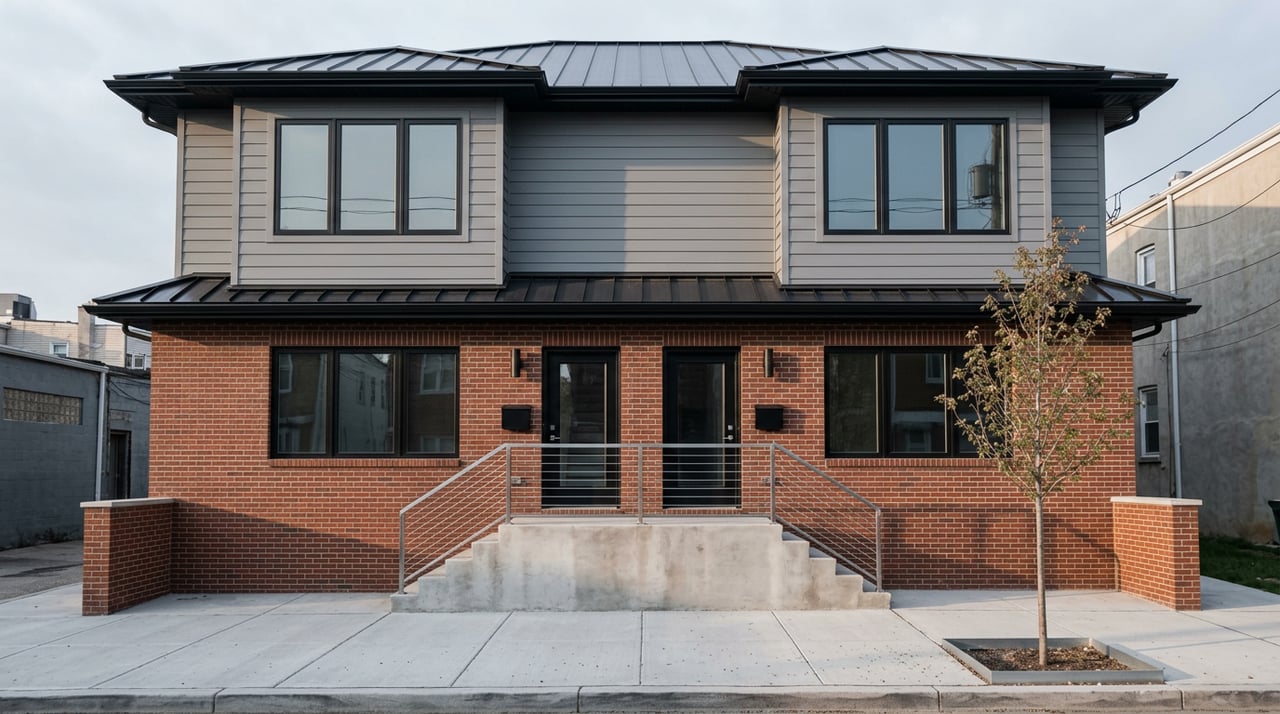
None of those addresses are waterfront towers. They're the kind of small multi-family buildings that show up constantly in the 2-4 unit market, on residential blocks named for streets and avenues rather than ferry terminals. The town's ordinance list is public, and it shows the same tool being used, year after year, on exactly the kind of property a multi-generational family or a small investor buys expecting a straightforward tax bill.
Two Different Instruments, Often Confused
Not every abatement on that list is the same animal. West New York's ordinances draw a real distinction, and it's one worth understanding before an offer goes in.
| Instrument | Typical Term | What It Covers |
|---|---|---|
| Five-year tax abatement | Up to 5 years | Phases in conventional tax on the improvement (new construction or renovation), while the land stays taxed normally |
| Long-term PILOT | 10 to 30 years | Replaces conventional property tax entirely with a negotiated annual service charge |
A five-year abatement on a renovated two-family is a short, predictable runway. A thirty-year PILOT on a new construction building is a different kind of commitment, one that can outlast a first mortgage, a second owner, and in some cases a buyer's entire hold period. Reading a listing's tax line without knowing which instrument applies is like reading a mortgage rate without knowing if it's fixed or adjustable.
Why the Bill Jumps, Not Just Rises
Here's the part that catches people at closing tables across the state, and it comes down to how PILOT revenue gets split. Under New Jersey's Long-Term Tax Exemption Law, a municipality keeps 95 percent of what a PILOT generates, with the remaining 5 percent going to the county. The school district gets nothing directly from that payment while the PILOT is in effect.
That detail is easy to skip past, but it explains why the tax bill on a PILOT unit doesn't quietly rise when the agreement ends. It resets. Once a parcel rolls off its PILOT and onto the conventional tax roll, the school portion of the levy, which had been effectively absent from that specific unit's bill the entire time, arrives in full for the first time. A buyer who financed their monthly carry around the PILOT-era number is suddenly underwriting a bill that includes a line item that was never there before.
What the Toll Brothers Deal Shows About Scale
The Port Imperial PILOT gives some sense of what these agreements look like in practice. According to the town's own ordinance, the Toll Parcel H Urban Renewal project was projected to generate an average of roughly $2.1 million a year for West New York over the agreement's 20-year term, a figure the ordinance cited as evidence that the arrangement would make the project attractive enough to investors and lenders to get built at all. That's the trade at the heart of every PILOT: the town accepts a negotiated payment, often lower than what conventional taxes on the finished project would eventually generate, in exchange for development that might not otherwise happen.
Multiply that structure across a Parcel H tower and a two-family on 64th Street, and the shape is the same even when the dollar figures aren't. Both are running on a clock. Only one of them tells you the number is temporary.
Before You Write the Offer
For a buyer or an investor evaluating anything in West New York carrying a reduced tax figure, waterfront condo or two-family walk-up alike, a short list of questions does most of the underwriting work a listing sheet won't:
- Which instrument applies: a five-year improvement exemption or a long-term PILOT?
- How many years remain on the agreement, measured from the original approval date, not from your closing date?
- What would the property's estimated conventional tax bill look like today, if the abatement didn't exist? Ask the seller's attorney or agent to pull the town's assessment.
- For a multi-family purchase, does the PILOT sit with the property itself or with a specific ownership entity, and does it transfer cleanly at sale?
- Does your lender's underwriting use the current PILOT payment or a modeled post-expiration figure? A five-year hold and a fifteen-year hold can produce very different answers to whether the deal still works.
A buyer's attorney can request the actual financial agreement from the municipality during attorney review. It's a public document, and reading it before signing is far cheaper than discovering the terms after closing.
FAQ
Does a PILOT transfer to a new owner when a property sells? Generally yes. The agreement runs with the property and the entity that holds it, not with any individual owner, so a buyer typically inherits both the remaining benefit and the remaining term. Confirming exactly how a specific agreement is structured is still worth doing through attorney review rather than assuming.
Why would a small two-family building need a PILOT at all? The same logic that applies to a large waterfront tower applies at smaller scale. If a renovation or new construction project wouldn't otherwise be financially viable at the numbers a bank or investor requires, a negotiated tax arrangement can be the difference between a property getting built or renovated and a lot sitting vacant. West New York's ordinance record shows this tool being used at both ends of that spectrum.
Does a PILOT affect financing or appraisal? It can. Lenders generally look at current taxes when calculating a debt-to-income ratio, which means an abated bill can make a purchase look more affordable today than it will be once the agreement expires. This is exactly the gap worth modeling before signing anything, ideally with guidance from someone who has actually pulled these agreements before.
None of this makes a PILOT-abated property a bad purchase. It makes it a purchase that needs a fuller picture than the tax line on the listing sheet provides, especially in a town where the town's own records show this tool being used regularly across both the waterfront corridor and its residential side streets.
If you're evaluating a condo, a two-family, or anything in between in West New York and want the actual terms pulled and read before you write an offer, reach out to Scott Selleck and the team. Schedule a Consultation and get the numbers that matter, not just the ones printed on the listing.