Why Assessments Break Deals Late
A special assessment is a charge the association levies on top of monthly fees to fund something the reserves cannot cover: a roof, a facade, an elevator, a garage deck, a boiler replacement. It can be a one-time charge or a multi-year payment plan attached to the unit.
The problem is not the assessment. The problem is when the buyer learns about it. Association documents, budgets, and meeting minutes go to the buyer's attorney after attorney review closes, which is usually two to three weeks into the contract. By then the buyer has paid for an inspection and has emotional and financial skin in the deal.
A buyer who learns about a $45,000 building charge at that point does one of two things. They reopen the price, or they walk and tell their agent the seller was not straight with them. Neither outcome is good, and both were avoidable.
Option One: Pay It Off at Closing
The seller satisfies the assessment balance in full at closing out of proceeds. The buyer takes title with no assessment attached to the unit.
This is the strongest position, and not only because it is generous. It changes what the buyer is underwriting. A unit with no open assessment is a clean comparison against every other listing in the market. A unit with an open assessment requires the buyer to build a spreadsheet before they can even compare it, and buyers who have to do math to understand a listing usually move on to the next one.
It also removes a lender friction point. Financing on a unit in a building with a large open assessment can draw underwriting questions the borrower did not expect, and those questions arrive close to the mortgage commitment deadline, which is where the post-contract timeline is already tightest.
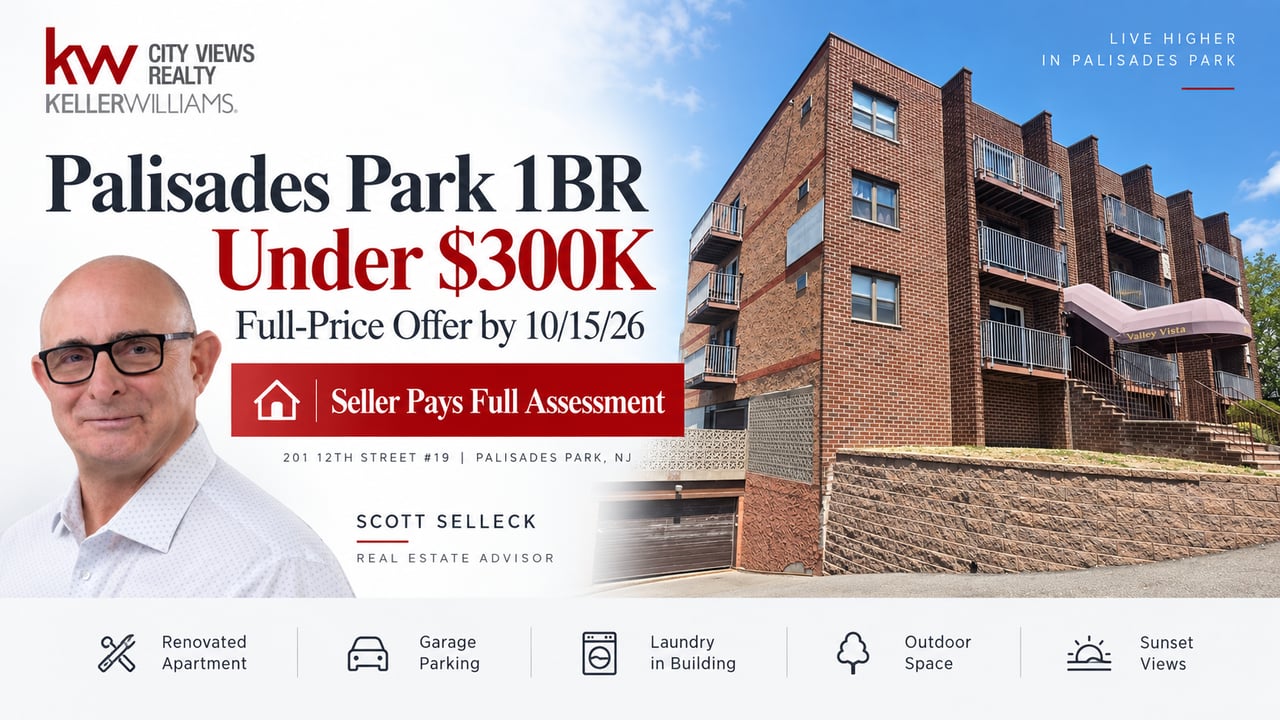
This is the structure on my current Palisades Park listing at 201 12th Street, Unit 19, where the building carries an assessment of approximately $45,000 and the seller pays it in full at closing.
Option Two: Credit the Buyer
Economically similar to paying it off. The seller credits the buyer at closing for the assessment amount, and the buyer takes on the obligation with cash in hand to cover it.
The catch is optics and lender limits. Seller credits are capped by loan program and by what the appraisal supports, so a large credit may not fit inside the transaction structure even when both parties want it. And a credit still leaves the buyer holding an association obligation, which some buyers simply will not do regardless of the math.
Use this when the assessment is on a payment plan that cannot be prepaid, or when the credit is small enough to fit comfortably inside program limits.
Option Three: Price the Unit for It
List below comparable units by roughly the assessment amount and let the buyer absorb it.
On paper this is the same money. In practice it is the weakest of the three, for a reason that has nothing to do with arithmetic. Your listing now shows up in searches at a lower price point, which means it competes against smaller and lesser units rather than its true peers. You attract a buyer pool shopping at the lower number, then ask them to accept an obligation that pushes their real cost back up to where they were not shopping.
It also gives every buyer a second bite. They negotiate off your already-reduced price, and the assessment becomes a lever they use twice.
Option Four: Leave It and Disclose It
Sometimes the seller has no choice. If the proceeds will not cover the balance, or the assessment is structured as a multi-year charge that the association will not accept early, the obligation transfers with the unit.
When that is the situation, over-disclose. Put the amount, the payment schedule, the purpose, and the association's timeline in the listing itself. Provide the budget and the relevant meeting minutes to any serious buyer before they spend money on an inspection. You will lose some buyers immediately, which is the point. The buyers who remain are pricing it correctly and will not blow up the deal three weeks in.
What Buyers Should Be Reading Either Way
Whichever structure you use, the informed buyer on the other side is reading four documents: the association budget, the reserve study, the last twelve months of meeting minutes, and the master insurance policy. Meeting minutes are the most revealing and the least requested. That is where the next assessment gets discussed a year before it gets levied.
Sellers benefit from reading the same documents. If minutes show a facade study underway, a buyer's attorney will find it, and you want to be the one who raised it.
Getting the Sequence Right
Order matters here. Pull your association's current statement of account and confirm the exact payoff figure before you set a price, not after you have an offer. Decide which of the four structures you are using and say so in the listing. Then run the pricing conversation with that structure already built in, which connects directly to the timing question.
A current home valuation on the unit, with the assessment treated correctly, tells you what you actually walk away with under each of the four options. That number, not the list price, is the one that matters.
The assessment is not the risk. Surprise is the risk.
Ready to Structure It?
If you own a unit in a building with an open assessment and you are thinking about selling in the next year, the structure decision comes before the price decision.
Start with the seven-question assessment at quiz.sellecksellsnj.com, or schedule a consultation and we will work through the four options against your numbers.
The Three Pillars Behind Every Smart Decision
Every real estate decision sits where timing, cash-flow, and lifestyle fit meet. Work all three or the math stops holding.
Timing & Strategy
Pull the payoff figure and pick your structure before you set a price, not after an offer. Start with the seven-question assessment at quiz.sellecksellsnj.com.
Financing & Cash-Flow
Each of the four structures produces a different net, and the list price is not the number that matters. See the advisory approach at scott.sellecksellsnj.com.
Lifestyle & Location Fit
Building quality and association health decide value as much as the unit itself does. Compare towns in the guides at northernnj.sellecksellsnj.com.
Frequently Asked Questions
Can you sell a condo in New Jersey with an open special assessment?
Yes. An open assessment is a negotiable contract term, not a legal barrier to sale. Sellers typically pay the balance at closing, credit the buyer, price the unit to reflect it, or transfer the obligation with the unit and disclose it clearly.
Do you have to disclose a special assessment to a buyer?
Practically, yes, and it is in your interest to do it early. The buyer's attorney reviews association budgets, minutes, and financials after attorney review closes, so the assessment will surface regardless. Disclosing it in the listing lets buyers price it into their offer rather than reopening negotiations weeks in.
Is it better to pay off a special assessment or credit the buyer?
Paying it off at closing usually produces the cleaner transaction. It removes an underwriting question, lets the unit compete directly against comparable listings, and avoids the seller credit limits imposed by loan programs and appraisals. A credit is a reasonable alternative when the assessment cannot be prepaid.
What documents should a condo buyer review before purchasing?
The association budget, the reserve study, the last twelve months of meeting minutes, and the master insurance policy. Minutes are the most useful and the least requested, because that is where future assessments are discussed long before they are levied.
Does a special assessment affect a buyer's mortgage approval?
It can. A large open assessment on a unit or a poorly funded association can draw underwriting questions, and those questions tend to arrive close to the mortgage commitment deadline. Resolving the assessment at closing removes that risk from the timeline.
This article is general information only and is not legal, tax, or financial advice. Association obligations, lender credit limits, and disclosure requirements vary by building, loan program, and transaction. Confirm your specific situation with your attorney, your association, and your lender. Commission in New Jersey is fully negotiable and is not set by law or by any board or association of Realtors.
Top 5 Sources
- Association governing documents, budgets, reserve studies, and meeting minutes as reviewed in Bergen and Hudson County condo transactions.
- N.J.A.C. 11:5-6.2 attorney review framework governing the post-contract document review window.
- Current listing data for 201 12th Street, Unit 19, Palisades Park, NJ, MLS 26025021.
- Scott Selleck Foundation Document for voice, positioning, and advisory framing.
- Scott Selleck Link Directory for CTA structure, internal linking, and required site references.