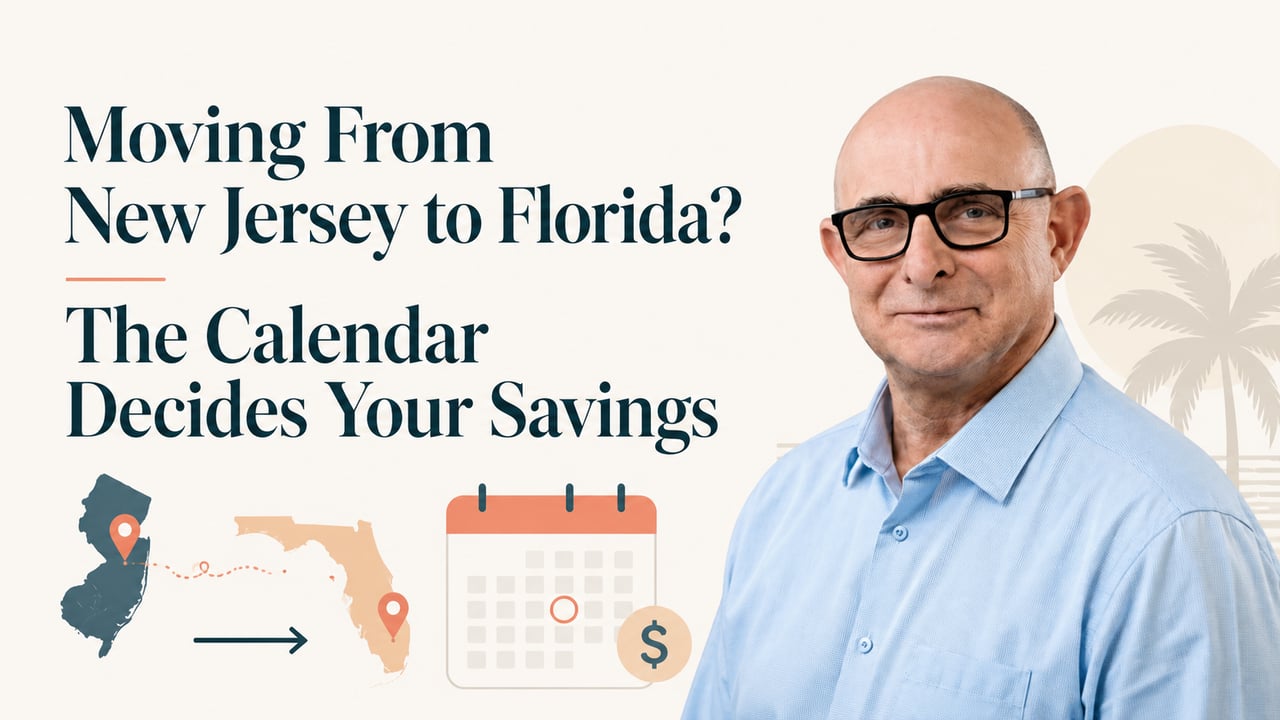
The Date That Decides Your Savings Is January 1
Florida grants the homestead exemption for a tax year only if you own the property and live in it as your permanent residence on January 1 of that year. That single line controls everything else. You can close in December and qualify for the coming year. You can close in February and wait until the following January 1 to qualify. The deed date and the move-in matter more than most buyers expect.
Permanent residence means intent, not a vacation pattern. Florida looks at where you actually live and where you mean to stay. Renting a place in Florida does not start the clock, because you do not own a homestead. The exemption attaches to a home you own and occupy as your main residence.
Once January 1 establishes your eligibility, March 1 is the filing wall. You submit Form DR-501 to the county property appraiser by March 1 of the tax year. Miss that filing date and you waive the exemption for that year, even if you qualified on January 1. Two dates, both firm.
What the Florida Homestead Exemption Actually Does
The Florida homestead exemption removes up to $50,000 from the taxable value of your home and then caps how fast that value can climb. The first $25,000 applies to every property tax, including school taxes. A second exemption of up to $25,000 applies to assessed value between $50,000 and $75,000 and covers every tax except school district levies.
The larger long-term benefit is the assessment cap. Florida's Save Our Homes provision limits the annual increase in your home's assessed value to 3 percent or the change in the Consumer Price Index, whichever is lower. After a few years of rising prices, that cap can hold your taxable value well below market value. For a retiree planning to stay a decade or more, the cap often matters more than the upfront exemption.
The homestead also carries protection that has nothing to do with taxes. Florida's constitution shields a homesteaded primary residence from most creditors. For owners who spent decades building equity in a New Jersey home, that protection is a real part of the appeal.
Why a December Closing Can Beat a February Closing
Closing before January 1 can be worth thousands of dollars compared with closing a few weeks later. Picture two buyers with the same Florida home. One closes on December 20 and moves in as a permanent resident. That buyer owns and occupies the home on January 1 and files by March 1, so the exemption and the assessment cap begin that year. The second buyer closes on February 10. That buyer did not own the home on January 1, so the exemption does not begin until the next January 1, a full year later.
The gap is not only the exemption dollars. It is also a year of uncapped assessment. The buyer who qualifies early locks in the Save Our Homes base sooner, which compounds every year the home is held. Timing the closing around January 1 is one of the few moves that keeps paying off for as long as you own the property.
This is why the New Jersey sale and the Florida purchase have to be planned together, not in sequence. If you wait to sell in New Jersey before you buy in Florida, the calendar can slip past January 1 before you ever close.
The Tax Gap Between New Jersey and Florida
The reason this move is worth the effort is the difference in what each state takes. Florida has no state income tax. New Jersey's income tax runs as high as 10.75 percent on top earners and reaches retirement income above the state's exclusion limits. For a household drawing on investments, a pension, or the proceeds of a business sale, that difference repeats every year.
Florida also has no estate tax and no inheritance tax. New Jersey repealed its estate tax, but it still imposes an inheritance tax of up to 16 percent on transfers to certain beneficiaries, such as nieces, nephews, and friends. For families who want to pass assets to anyone outside the closest relatives, Florida domicile can change the outcome for heirs.
Capturing these benefits depends on a genuine change of domicile, and New Jersey examines that closely. Buying a home in Florida is not enough on its own. You generally need to make Florida the center of your life: spend the majority of the year there, file a Declaration of Domicile, move your driver's license and voter registration, and shift the records that show where you actually live. The mechanics matter, and a New Jersey accountant who handles relocations should confirm your plan before you rely on the savings.
Selling Your New Jersey Home Without Losing the Window
The cleanest relocations treat the New Jersey sale and the Florida purchase as one connected plan. You want the New Jersey home under contract on a timeline that lets you close in Florida and establish residency before January 1. That often means listing in New Jersey earlier than feels necessary, because a fall sale gives you room to close in Florida by December.
New Jersey sellers also have a newer cost to plan around. The state's graduated percent fee, the updated version of the mansion tax, now falls on the seller for homes that sell above one million dollars, with rates that climb by price tier. If your Bergen or Hudson County home will sell in that range, the net proceeds you carry to Florida depend on building that cost into the sale. A current valuation is the starting point, so you can begin with a home valuation to see where your number lands.
For owners selling a long-held family home as part of the move, the steps overlap with settling an estate or clearing a lifetime of belongings. The 2026 estate sale playbook covers that side of the process in detail.
The Three Pillars Behind a Clean Relocation
A move from New Jersey to Florida sits at the intersection of timing, money, and the life you want next. The same three pillars guide every relocation plan.
Timing & Strategy
The January 1 and March 1 deadlines decide your first year of savings. Start with the assessment at yourselleckgroupresources.com/quiz.
Financing & Cash-Flow
Your New Jersey proceeds and your Florida tax picture set the budget for the move. See the advisory approach at scott.sellecksellsnj.com.
Lifestyle & Location Fit
The right Florida community depends on more than price. Compare options against your Bergen or Hudson County baseline at northernnj.sellecksellsnj.com.
Frequently Asked Questions
Do I have to sell my New Jersey home before I claim the Florida homestead exemption?
No. You qualify by owning and permanently occupying the Florida home on January 1 and filing by March 1. You do not have to sell in New Jersey first. You do need Florida to be your true primary residence, so you cannot claim homestead on two states' homes at once.
What happens if I close on my Florida home in February?
You miss the exemption for that tax year. Because you did not own and occupy the home on January 1, the exemption and the Save Our Homes cap begin the following January 1. Closing before year end is what captures the savings a full year sooner.
Does renting in Florida start my homestead timeline?
No. The homestead exemption attaches to a home you own and occupy as your permanent residence. Renting does not qualify, because there is no homestead to exempt. The clock starts when you own and live in the property.
Will New Jersey still tax me after I buy in Florida?
It can, if New Jersey still treats you as a domiciliary. Buying a Florida home does not end your New Jersey tax exposure on its own. You generally need to change your domicile in fact, which New Jersey reviews based on where you spend your time and keep your life. A tax professional who handles relocations should confirm your status.
If I move again within Florida later, do I keep my assessment cap?
Florida lets you transfer your accumulated Save Our Homes benefit to a new Florida homestead within three tax years. That portability matters if you expect to move again inside the state after the initial relocation.
This article explains general tax and relocation concepts for New Jersey homeowners considering a move to Florida. It is not tax, legal, or financial advice. Homestead rules, filing deadlines, and residency requirements carry specific conditions and exceptions, and figures change over time. Confirm your situation with a qualified tax professional or an attorney licensed in the relevant state before you act.
Top 5 Sources
- Florida Department of Revenue, homestead exemption rules, Save Our Homes, and Form DR-501 (floridarevenue.com).
- Florida county property appraiser guidance on homestead filing deadlines and portability (for example, the Palm Beach County Property Appraiser).
- New Jersey Division of Taxation, gross income tax and transfer inheritance tax overview (nj.gov).
- Scott Selleck Foundation Document for voice, positioning, and advisory framing.
- Scott Selleck Link Directory for CTA structure, internal linking, and required site references.