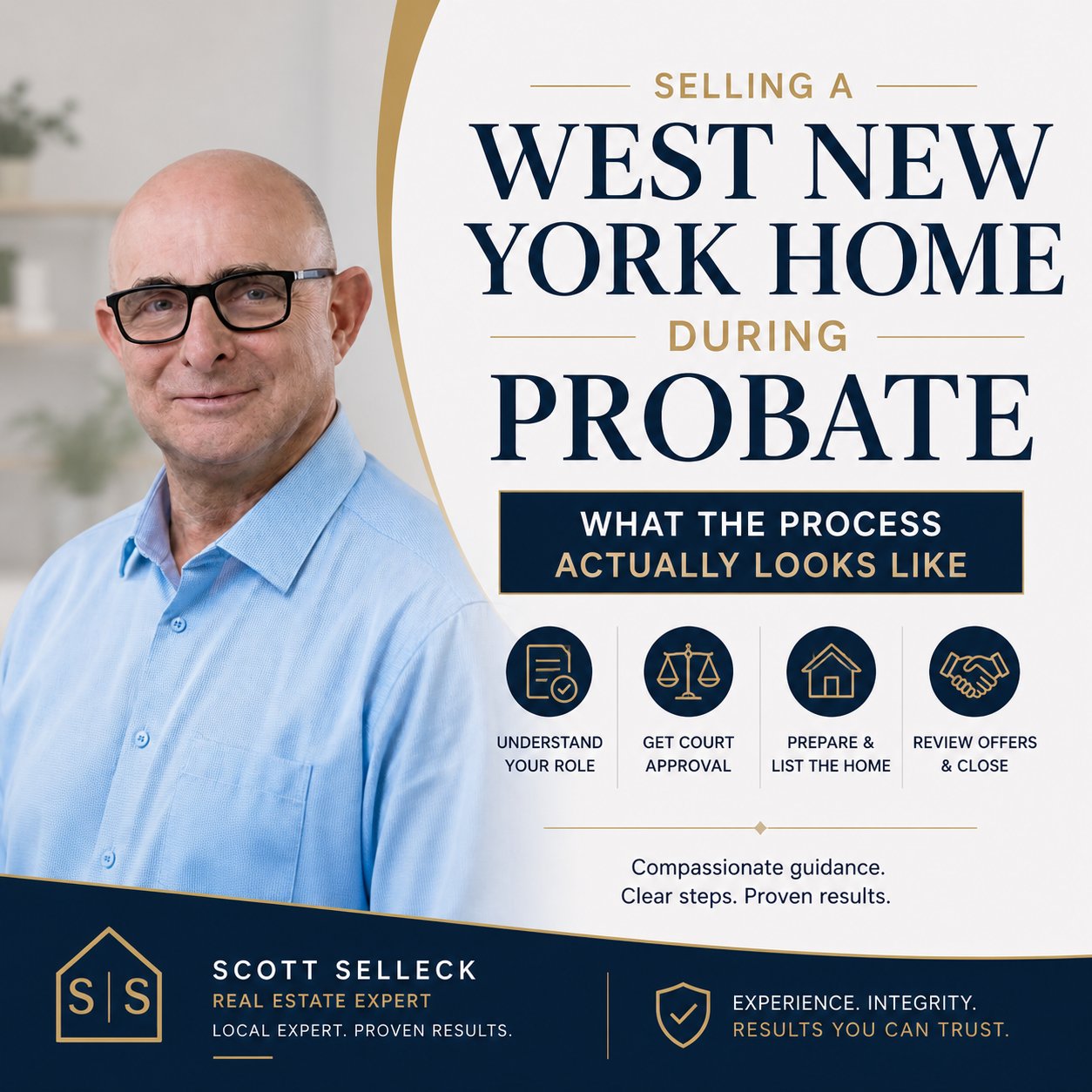
Selling a West New York Home During Probate: What the Process Actually Looks Like
Can you sell a West New York home while it is in probate? Yes. Selling a home in probate in New Jersey is legal and common, but the executor or administrator must obtain court authorization before accepting an offer or closing. The process adds time but does not prevent a successful sale.
When a homeowner in West New York passes away, the property does not simply transfer on its own. If there is no living trust or joint tenancy arrangement in place, the home must pass through probate, New Jersey's legal process for settling an estate. That process can feel overwhelming, especially when heirs are trying to handle grief and logistics at the same time.
Selling the home is often the right financial move, and it is entirely possible during probate. It requires patience, coordination with an estate attorney, and a REALTOR who understands how probate sales work in Hudson County. Here is what the process actually looks like.
What Probate Means for a West New York Property
Probate is the legal process through which a deceased person's estate is validated and distributed. In New Jersey, it is administered through the Surrogate's Court in the county where the decedent lived. For a West New York property, that is Hudson County Surrogate's Court.
The court appoints an executor if one is named in the will, or an administrator if there is no will. That person has the legal authority to manage and sell estate property, subject to court oversight and the rights of beneficiaries.
Step One: Open the Estate
Before any sale activity can begin, the estate must be formally opened. This involves filing the will and a certified copy of the death certificate with the Hudson County Surrogate's Court and receiving Letters Testamentary if there is a will, or Letters of Administration if there is not.
This step typically takes two to six weeks, sometimes longer if there are complications with the will or if heirs are disputing the process. It cannot be rushed, but it can be started immediately after the death.
Step Two: Establish Authority to Sell
Once Letters Testamentary or Letters of Administration are in hand, the executor or administrator has legal authority to act on behalf of the estate. In many New Jersey probate situations, the executor can list and sell the property without additional court approval, particularly if the will grants full power to sell real estate.
If court confirmation is required, the process involves filing a petition, notifying beneficiaries, and in some cases attending a hearing. An estate attorney familiar with Hudson County probate procedure will handle this efficiently. Scott Selleck coordinates directly with estate attorneys to ensure the listing timeline aligns with legal approvals.
Step Three: List and Market the Property
Probate properties in West New York are sold like any other listing on the NJMLS or HCMLS, with full MLS exposure, buyer showings, and open houses if appropriate. There is no requirement to accept a below-market offer. The executor has a fiduciary duty to the beneficiaries, which means the goal is fair market value.
The West New York market is active. Hudson County has strong demand from buyers priced out of Manhattan and Jersey City. A well-priced West New York property in any condition will attract interest. The executor's job, with guidance from The Selleck Group, is to maximize the estate's return.
Step Four: Accept an Offer and Close
Once an offer is accepted, the standard NJ real estate contract process applies, including attorney review, home inspection, and financing contingencies. If court confirmation of the sale is required in your specific situation, the closing timeline will reflect that additional step.
Proceeds from the sale go directly to the estate and are distributed to beneficiaries after debts, taxes, and expenses are settled.
Common Questions and Complications
Multiple heirs must agree. All beneficiaries with an interest in the property must be in alignment. If there is disagreement, the estate attorney may need to petition the court for authorization to sell over an objection.
The home may need maintenance. Vacant probate properties can deteriorate quickly. The executor has a duty to maintain the property during the process. At minimum, utilities should stay on and the home should be secure.
There is no urgency to rush. Probate takes time. A well-coordinated timeline produces better outcomes than pressure-selling into a low offer because someone wanted to close fast.
FAQ
How long does probate take in New Jersey before a home can be sold? The minimum time to open an estate and receive Letters Testamentary is typically two to six weeks. A straightforward sale can close three to four months after the process begins, though complex estates take longer.
Can the executor sell a West New York home without all heirs agreeing? If the will grants the executor full power to sell, agreement from all heirs may not be legally required. However, beneficiaries must be notified of the sale, and disputes can be brought before the court. An estate attorney in Hudson County will clarify your specific authority.
Does a probate sale mean accepting a lower price in Hudson County? Not necessarily. Probate properties sell at market value when marketed properly. The executor's fiduciary duty actually requires pursuing fair market value, not accepting the first offer out of convenience.
Handling an estate property in West New York or Hudson County? Scott Selleck, REALTOR at The Selleck Group at KW City Views Realty, works directly with executors and estate attorneys to manage probate listings from start to close. He brings 34 years of experience and 500+ closed transactions to every situation. Call or text 201-970-3960 or schedule a consultation at SelleckSellsNJ.com. Connect at delphi.ai/scottselleck.