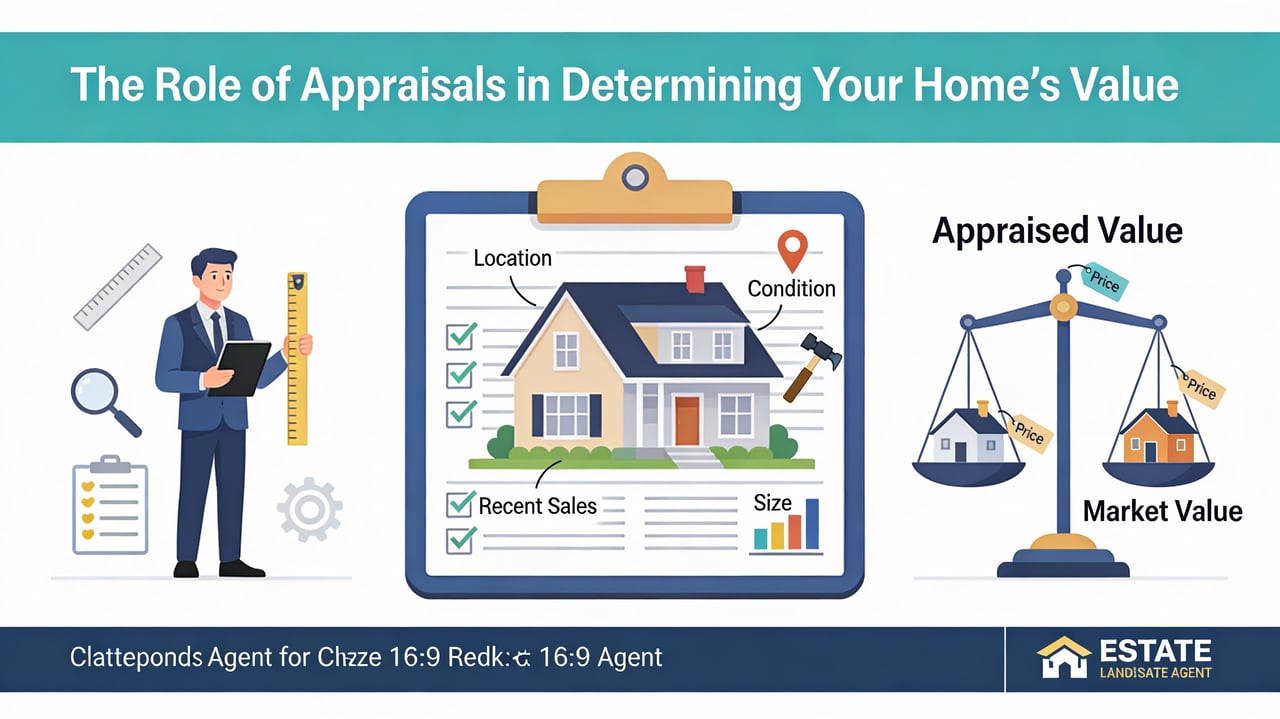
The Role of Appraisals in Determining Your Home’s Value
Opening Question:How much power does an appraisal really have over your home’s value?
Snippet Answer: An appraisal doesn’t decide what your home is worth — but it can determine whether a deal moves forward, gets renegotiated, or falls apart. Understanding how appraisals work is essential if you want to protect your equity.
What an Appraisal Actually Does (and Doesn’t Do)
An appraisal is a lender-required opinion of value, designed to protect the bank — not the buyer or the seller.
It answers one question only:
“Is this property worth at least the amount being financed?”
It does not:
Reflect emotional value
Account for future appreciation
Guarantee market value
Replace real buyer demand
Market value is set by buyers. Appraisals simply confirm whether the bank is comfortable backing the loan.
How Appraisers Determine Value
Appraisers rely on a combination of data, observation, and standardized guidelines.
Key factors include:
Recent comparable sales (usually within 3–6 months)
Location and micro-market trends
Square footage and layout
Condition and upgrades
Building or neighborhood influence
What many homeowners don’t realize is that appraisers must stay conservative. Even in strong markets, they are trained to avoid aggressive pricing unless the data clearly supports it.
Why Appraisals Can Come in Low — Even in a Hot Market
Low appraisals are not always a sign that your home is overpriced.
Common reasons include:
Limited comparable sales in your immediate area
Unique features that buyers value but appraisers can’t fully quantify
Rapid price appreciation outpacing closed-sale data
Overreliance on inferior or outdated comps
This is especially common in Northern NJ micro-markets, luxury properties, and condos with varying views, finishes, or building dynamics.
The Appraisal vs. the Market: Who Wins?
If a home appraises below the contract price, three things can happen:
The buyer brings additional cash
The seller renegotiates
The deal falls apart
This is where experience matters.
A strong listing strategy anticipates appraisal risk before the home goes under contract — through pricing, positioning, and documentation that supports value from day one.
How Sellers Can Protect Their Value
Appraisals aren’t random. They can be influenced — ethically and professionally — through preparation.
Smart seller strategies include:
Accurate pricing from the start
Strong comparable selection
Clear documentation of upgrades and renovations
Clean presentation and condition
An agent who knows how to communicate value to the appraiser
Appraisals don’t reward hope. They reward evidence.
What This Means for Northern NJ Homeowners
In Bergen County, Hudson County, and along the Gold Coast, no two homes — or deals — are alike. Street-level nuances, building reputation, views, and buyer profiles all matter.
Relying on online estimates or assuming an appraisal will “just work out” is one of the fastest ways to lose leverage.
Final Takeaway
Your home’s value is ultimately determined by what a qualified buyer is willing to pay — but an appraisal can either support that number or challenge it.
When pricing, marketing, and negotiation are handled strategically, appraisals become a checkpoint — not an obstacle.
Ready to Talk About Your Home’s True Value?
If you’re thinking about selling — now or in the future — the smartest first step is understanding how your home would be viewed by buyers, lenders, and appraisers in today’s market.
Let’s walk through it together.
Schedule a call anytime.
Scott Selleck | The Selleck Group
Licensed Since 1993 | Northern NJ Specialist
Keller Williams City Views Realty, Fort Lee
📞 Call/Text: 201-970-3960
📧 Email:[email protected]
📝 Blog:https://sellecksellsnj.com/blog