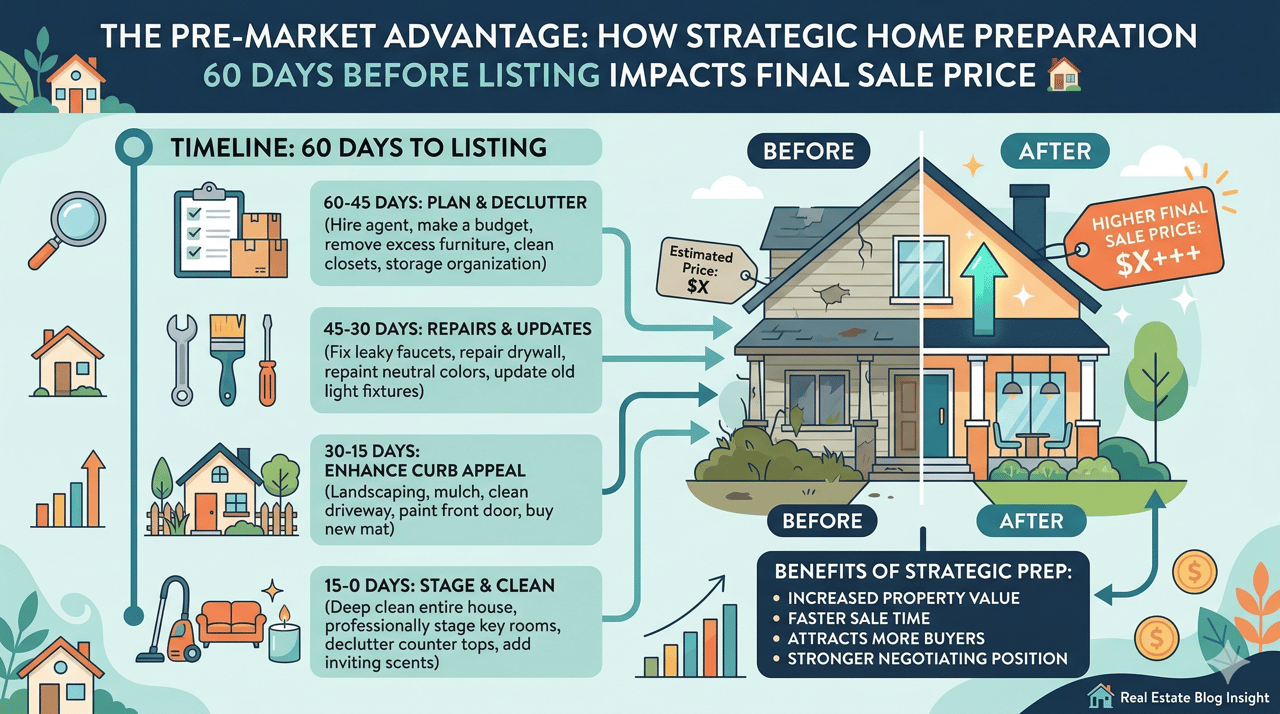
The Pre-Market Advantage: How Strategic Home Preparation 60 Days Before Listing Impacts Final Sale Price 🏡
Most homeowners believe the selling process begins when the listing goes live. In reality, the most important work happens well before that moment.
The 30 to 60 days leading up to a listing can significantly influence how quickly a home sells, how much attention it receives, and ultimately, the final sale price. Sellers who approach this phase strategically often create stronger demand, better first impressions, and more favorable negotiating positions.
This is what can be called the Pre-Market Advantage.
Why the First Impression Happens Before Buyers Even Walk In
Today’s buyers are highly informed and selective. By the time they schedule a showing, they have already reviewed photos, compared properties, and formed expectations.
That means your home is not being judged when someone walks through the front door. It is being judged the moment it appears online.
Homes that are properly prepared before listing tend to stand out immediately. They feel intentional, well-maintained, and aligned with buyer expectations. This creates momentum early, which is one of the most important factors in achieving strong results.
The Cost of Skipping Pre-Market Preparation
When sellers rush to market without preparation, several issues often emerge:
-
Inconsistent or underwhelming presentation
-
Missed repair items that raise concerns during showings
-
Pricing challenges due to lack of positioning clarity
-
Reduced buyer interest in the first critical weeks
Once a home hits the market, time becomes visible. Days on market can influence perception, and price reductions may weaken negotiating leverage.
In contrast, preparation allows sellers to enter the market from a position of strength rather than reaction.
Step One: Evaluating the Home Through a Buyer’s Lens
The first stage of preparation is not making improvements. It is gaining clarity.
This involves walking through the home as a buyer would and identifying areas that may impact perception. These are often not major renovations. Instead, they are smaller details that collectively shape how a home feels.
Examples include:
-
Lighting quality and natural brightness
-
Flow between rooms
-
Visual clutter or over-personalization
-
Deferred maintenance items
A structured evaluation helps prioritize what actually matters, rather than spending money on unnecessary upgrades.
Step Two: Strategic Improvements With Measurable Impact
Not all updates deliver equal value. The goal is not to renovate. It is to position the home effectively within its price range.
High-impact areas typically include:
-
Paint and neutral color adjustments
-
Flooring refinements or repairs
-
Kitchen and bathroom presentation improvements
-
Exterior curb appeal
These changes help buyers see the home as “move-in ready” in a practical sense, even if it is not fully renovated.
The key is aligning improvements with buyer expectations in your specific market, not chasing trends.
Step Three: Decluttering and Spatial Optimization
One of the most overlooked aspects of preparation is space perception.
Buyers are not just evaluating square footage. They are evaluating how the space feels. A well-organized home often appears larger, brighter, and more functional.
This stage may involve:
-
Removing excess furniture
-
Organizing storage areas
-
Depersonalizing rooms
-
Creating clean, open visual lines
For long-time homeowners, this step can feel overwhelming. However, addressing it early reduces stress later and improves overall presentation.
Step Four: Pre-Listing Inspections and Risk Reduction
Some sellers benefit from addressing potential issues before going to market.
A pre-listing inspection or contractor review can identify concerns that might arise during buyer due diligence. Handling these proactively can:
-
Reduce negotiation surprises
-
Improve buyer confidence
-
Streamline the closing process
This approach is particularly valuable for older homes or properties that have not been updated recently.
Step Five: Professional Marketing Preparation
High-quality marketing does not happen overnight. Photography, video, and digital presentation require planning.
Homes that are prepared in advance allow for:
-
Professional photography in optimal conditions
-
Thoughtful staging or styling
-
Compelling listing descriptions
-
Coordinated launch strategy
This creates a strong debut, which is critical in attracting serious buyers quickly.
Timing the Market Entry
One of the biggest advantages of pre-market preparation is flexibility.
Instead of rushing to list, sellers can choose a launch window based on:
-
Local inventory levels
-
Buyer demand patterns
-
Seasonal timing
This allows for better alignment between market conditions and property readiness.
The Financial Impact of Preparation
While preparation requires time and sometimes investment, the return can be significant.
Homes that enter the market well-prepared often:
-
Generate more initial interest
-
Attract stronger offers
-
Spend less time on market
-
Maintain better negotiating leverage
In many cases, the difference in outcome far exceeds the cost of preparation.
Final Thoughts
Selling a home is not a single event. It is a process that begins well before the listing goes live.
The Pre-Market Advantage is about shifting from reactive to proactive. It is about making decisions with clarity, preparing thoughtfully, and entering the market from a position of strength.
For homeowners considering a move in the next 3 to 12 months, starting early can make a meaningful difference. It allows time to plan, adjust, and position the property in a way that supports both financial and lifestyle goals.