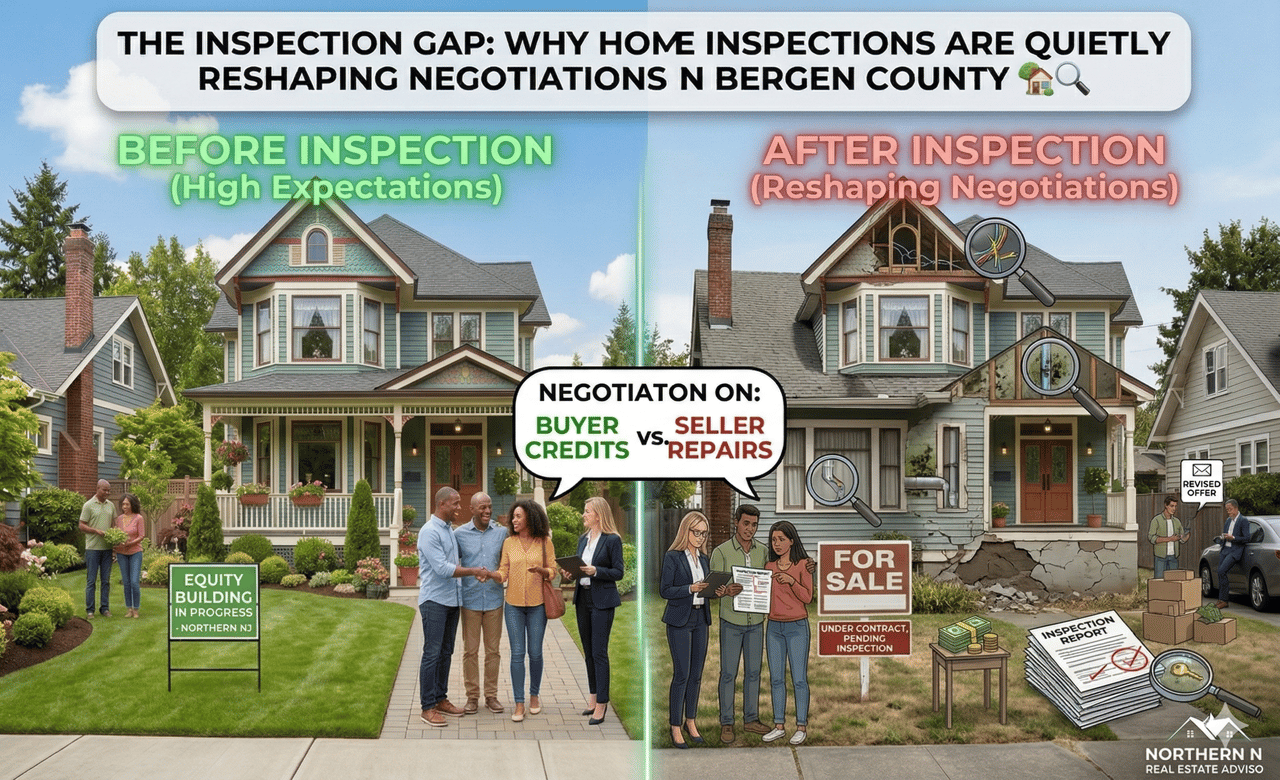
The Inspection Gap: Why Home Inspections Are Quietly Reshaping Negotiations in Bergen County 🏡🔍
For many homeowners, the home inspection is viewed as a routine step in the selling process. The deal is agreed upon, contracts are signed, and then the inspection happens.
In reality, inspections have become one of the most influential negotiation points in today’s market.
What was once a formality is now a strategic turning point that can impact pricing, terms, timelines, and even whether a deal stays together.
Understanding how inspections are shaping negotiations can help sellers protect their position and avoid costly surprises.
What Is the “Inspection Gap”?
The “inspection gap” refers to the difference between what a seller believes they are offering and what a buyer perceives after the inspection.
This gap can include:
-
Deferred maintenance the seller has grown accustomed to
-
Minor issues that feel major to a buyer
-
Aging systems that raise future cost concerns
-
Safety or code-related items that trigger negotiation
Even well-maintained homes are not immune. The issue is not always condition. It is perception.
Why Inspections Carry More Weight Today
Today’s buyers are more informed and more cautious.
They are factoring in:
-
Higher borrowing costs
-
Long-term maintenance expenses
-
Reduced tolerance for unexpected repairs
As a result, inspection findings are being evaluated more carefully. Buyers are less likely to overlook issues and more likely to use them as leverage.
In Bergen County, where many homes are older and full of character, this becomes especially relevant. Even small findings can influence negotiation dynamics.
The Most Common Inspection Triggers
While every home is different, certain categories tend to generate the most discussion:
1. Roofing and Structural Concerns
Buyers pay close attention to roof age, foundation condition, and signs of water intrusion. These items carry high perceived risk.
2. Electrical and Plumbing Systems
Outdated panels, wiring issues, or aging plumbing can create hesitation, even if still functional.
3. HVAC Systems
Heating and cooling systems near the end of their lifespan often become negotiation points.
4. Safety Items
Loose railings, missing detectors, or code-related concerns may seem minor but can influence buyer confidence.
5. General Maintenance
Accumulated small issues can add up, creating an overall impression that the home has not been fully maintained.
How Inspection Negotiations Typically Unfold
After the inspection, buyers usually respond in one of three ways:
-
Request repairs before closing
-
Request a credit or price reduction
-
Accept the property as-is
The outcome depends on market conditions, buyer motivation, and how the home was positioned initially.
Homes that generate strong demand early often have more leverage during this phase. Homes with limited interest may face more aggressive renegotiation.
The Risk of Being Unprepared
Sellers who approach inspections reactively often find themselves at a disadvantage.
Common challenges include:
-
Emotional reactions to buyer requests
-
Uncertainty about what is reasonable
-
Pressure to respond quickly
-
Lack of contractor insight or cost estimates
This can lead to over-concessions or strained negotiations.
How to Close the Inspection Gap Before It Opens
The most effective strategy is preparation.
1. Pre-Listing Evaluation
Walking through the home with a critical eye, or even conducting a pre-listing inspection, can identify potential issues early.
2. Addressing Key Concerns
Not every issue needs to be fixed, but addressing major items in advance can reduce negotiation friction.
3. Documenting Improvements
Providing records of maintenance, repairs, and upgrades builds buyer confidence.
4. Setting Expectations
Clear communication about the home’s condition can prevent misunderstandings later.
Strategic Decisions: Repair vs Credit
Not all inspection issues should be handled the same way.
In some cases, making repairs before listing creates a cleaner transaction. In others, offering a credit allows the buyer to handle improvements on their own terms.
The decision depends on:
-
The nature of the issue
-
Buyer expectations in your price range
-
Timing and logistical considerations
A strategic approach avoids unnecessary expense while maintaining negotiating strength.
The Role of Pricing in Inspection Outcomes
Pricing and inspections are closely connected.
Homes that are priced appropriately and generate strong interest often experience smoother inspection negotiations. Buyers feel they are receiving fair value and may be less likely to push aggressively.
Overpriced homes, on the other hand, may face compounded challenges. Limited interest followed by inspection concerns can lead to significant concessions.
Emotional Detachment Is Key
One of the most important factors in navigating inspections is mindset.
Sellers who view the process objectively tend to make better decisions. Those who take requests personally may react defensively, which can escalate tension.
Remember, buyers are not criticizing your home. They are evaluating a major financial decision.
Final Thoughts
The home inspection is not just a checkpoint. It is a negotiation phase that can shape the final outcome of your sale.
By understanding the inspection gap and preparing in advance, sellers can reduce surprises, maintain leverage, and move through the process with greater confidence.
In a market like Bergen County, where buyer expectations are high and property conditions vary widely, preparation is not just helpful. It is strategic.
The goal is not perfection. It is clarity, positioning, and control.