The Hidden Risk of Overexposed Listings in Bergen County and How to Avoid Market Fatigue 🏡
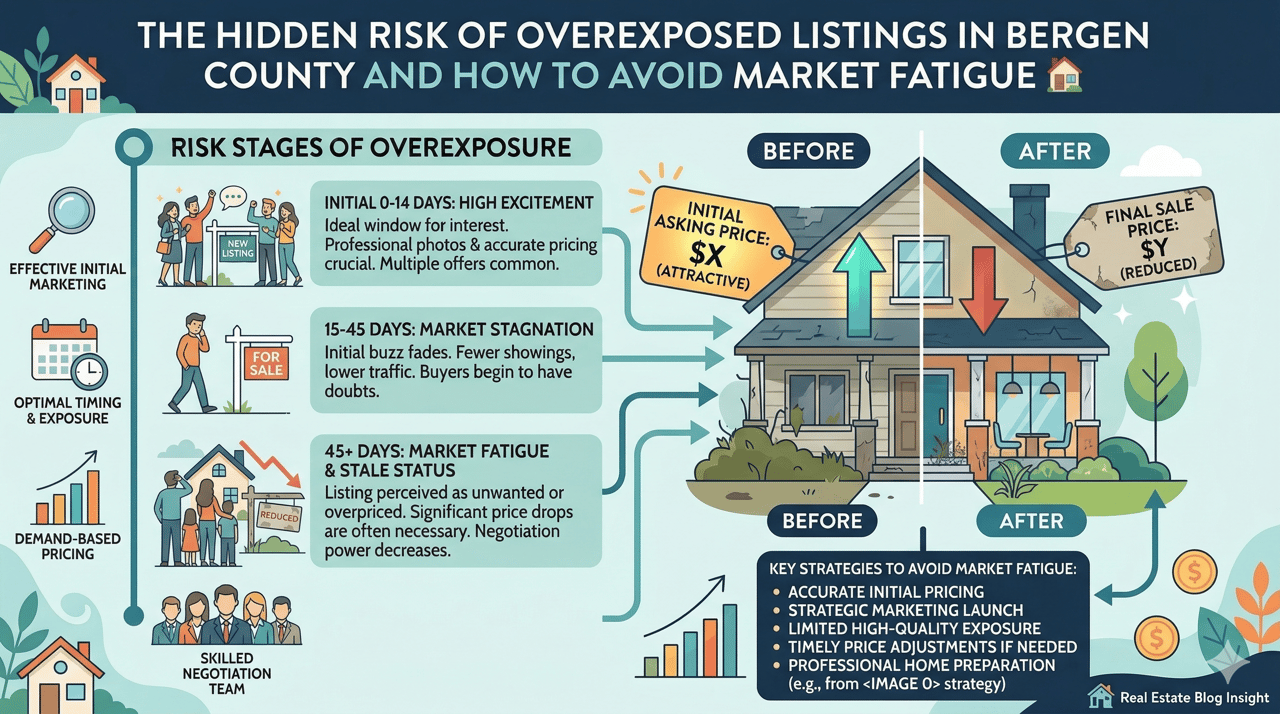
When a home first hits the market, it enters what can be described as its highest visibility window. This is the period when buyer interest is strongest, online activity peaks, and the opportunity to generate momentum is at its highest.
However, not every listing capitalizes on this window.
Some homes become what experienced agents quietly recognize as overexposed listings. These are properties that remain on the market too long, go through multiple price reductions, or lose buyer engagement over time. The result is something known as market fatigue, and once it sets in, it can be difficult to reverse.
Understanding how this happens and how to avoid it can make a meaningful difference in both sale price and overall experience.
What Is Market Fatigue?
Market fatigue occurs when a property has been available long enough that buyers begin to question it.
Instead of creating urgency, the listing creates hesitation.
Buyers may start asking:
-
Why has this home not sold?
-
Is it overpriced?
-
Are there hidden issues?
-
Will the seller accept less later?
Even if the home is well-maintained and properly located, perception begins to shift. In real estate, perception often drives behavior as much as facts.
Why Overexposure Happens
Overexposure is rarely caused by a single factor. It is usually the result of a combination of strategic missteps.
1. Overpricing at Launch
The most common cause is starting too high. While it may seem reasonable to “test the market,” today’s buyers are highly informed. If a property is priced above perceived value, many buyers simply skip it.
The first two to three weeks are critical. Missing that initial wave of interest can significantly reduce long-term leverage.
2. Weak Initial Presentation
First impressions matter. If photography, staging, or overall presentation does not reflect the home’s full potential, buyers may scroll past the listing without scheduling a showing.
Once that opportunity is lost, it is difficult to regain the same level of attention.
3. Lack of Strategic Launch Timing
Timing is often overlooked. Listing during a slow period, competing against a surge of inventory, or entering the market without preparation can reduce early visibility.
4. Incremental Price Reductions
Multiple small price cuts over time can signal uncertainty. Instead of attracting new buyers, they may reinforce the perception that the property was overpriced from the beginning.
The Psychology Behind Buyer Behavior
Today’s buyers track listings closely. They see price changes, days on market, and how long a property has been available.
A new listing creates curiosity.
A stale listing creates caution.
Buyers often assume that time equals leverage. If a home has been sitting, they may expect concessions, lower offers, or additional negotiation room.
In contrast, a well-positioned home that generates early interest can create a sense of competition, even in a balanced market.
The Cost of Market Fatigue
Market fatigue does not just affect perception. It can have real financial consequences.
Homes that become overexposed often experience:
-
Longer time on market
-
Increased carrying costs
-
Lower final sale prices
-
More complex negotiations
-
Reduced seller confidence
In some cases, sellers who initially aimed high may ultimately accept less than they would have achieved with a stronger launch strategy.
How to Avoid Overexposure
Avoiding market fatigue requires a proactive approach. The goal is to create momentum early and sustain it through strategic positioning.
1. Price for Positioning, Not Testing
A well-researched pricing strategy should reflect current market conditions, comparable sales, and buyer expectations.
Positioning a home correctly at launch attracts serious attention. It can also create the conditions for stronger offers rather than reactive price reductions.
2. Invest in Pre-Market Preparation
Preparation directly impacts perception. Addressing repairs, decluttering, optimizing layout, and enhancing curb appeal all contribute to how buyers experience the home.
This step helps ensure that the listing stands out from day one.
3. Prioritize High-Quality Marketing
Professional photography, video, and compelling property descriptions are essential.
In many cases, buyers decide whether to visit a home within seconds of viewing it online. Strong visuals and clear messaging can significantly increase showing activity.
4. Coordinate a Strategic Launch
A thoughtful launch plan may include:
-
Pre-marketing within agent networks
-
Coordinated listing timing
-
Maximizing exposure across digital platforms
The goal is to concentrate attention rather than spreading it out over time.
5. Monitor Early Feedback Closely
The first few weeks provide valuable data. Showing activity, buyer feedback, and agent input can indicate whether adjustments are needed.
Responding quickly to market signals helps maintain momentum.
Can a Stale Listing Be Revived?
Yes, but it requires a reset.
Simply relisting a property without meaningful changes rarely produces different results. A true repositioning strategy may involve:
-
Adjusting price more decisively
-
Improving presentation or staging
-
Updating marketing materials
-
Reintroducing the property with a fresh launch approach
The goal is to shift perception and create a renewed sense of opportunity.
A Smarter Way to Think About Time on Market
Not all time on market is negative. Some properties naturally take longer due to price point, uniqueness, or buyer pool size.
The key difference is whether the listing maintains engagement and relevance.
A well-positioned home may take time but still attract consistent interest and qualified buyers. An overexposed home, on the other hand, experiences declining activity and increasing skepticism.
Final Thoughts
Overexposure is not just about time. It is about missed opportunity during the most important phase of the listing lifecycle.
The first impression is often the only chance to capture maximum attention and create strong buyer interest. Sellers who approach the process with a clear strategy, thoughtful preparation, and accurate pricing are far more likely to avoid market fatigue.
In a market like Bergen County, where buyer expectations are high and competition can vary block by block, positioning matters.
The goal is not simply to list a home. It is to launch it effectively, maintain momentum, and create the conditions for a successful sale.