Move-Up Buyers in Bergen County: How to Buy Your Next Home Without Selling Under Pressure 🏡
For many homeowners, the next move is not about downsizing. It is about moving up.
A growing family, a need for more space, a better layout, or a different location often drives the decision. On paper, it seems straightforward. Sell your current home, buy the next one, and transition smoothly.
In reality, move-up buyers face one of the most complex challenges in real estate: timing two major transactions without creating unnecessary pressure.
Handled incorrectly, this process can lead to rushed decisions, financial strain, or missed opportunities. Handled strategically, it can create flexibility, confidence, and a stronger overall outcome.
Why Move-Up Buyers Feel Stuck
Many homeowners considering a move-up purchase are sitting on significant equity. That is a strong advantage, but it also creates a sequencing challenge.
Common concerns include:
-
Not wanting to sell before finding the next home
-
Fear of being temporarily without housing
-
Worry about carrying two mortgages
-
Uncertainty about how competitive their offer will be
This often leads to hesitation. Some buyers delay their move for months or even years, waiting for a “perfect” moment that may never arrive.
The key is not waiting. It is building a strategy that removes pressure from the process.
Understanding the Core Challenge
At its core, the move-up process involves coordinating two timelines:
-
Selling your current home at the strongest possible price
-
Securing your next home in a competitive market
These goals can conflict if not managed properly.
For example, listing too early without a plan for your next purchase can create urgency. Waiting too long to list may limit your ability to compete as a buyer.
The solution lies in creating flexibility between these two timelines.
Strategy #1: Sell First, Then Buy With Strength
One of the most conservative and financially secure approaches is selling your current home before purchasing your next one.
Advantages:
-
You know exactly how much equity you have
-
No risk of carrying two mortgages
-
Stronger negotiating position as a non-contingent buyer
Challenges:
-
You may need temporary housing
-
You may feel pressure to find a home quickly after closing
This strategy works well when a short-term rental, leaseback, or flexible living arrangement is available. It removes financial uncertainty and allows you to act decisively when the right home appears.
Strategy #2: Buy First With a Contingent Plan
Some buyers prefer to secure their next home before selling. This approach can work, but it requires careful planning.
Advantages:
-
You avoid the need for temporary housing
-
You can move directly from one home to another
Challenges:
-
Offers may be less competitive if contingent on selling
-
Financial exposure if your current home does not sell quickly
In competitive areas of Bergen County, contingent offers can be less attractive to sellers. However, strong preparation and pricing strategy on your current home can help offset this.
Strategy #3: Bridge the Gap With Financing Solutions
For some move-up buyers, financial tools can provide flexibility.
Bridge loans or home equity lines of credit may allow you to access equity before your home is sold. This can help fund a down payment on your next property while giving you time to sell.
Advantages:
-
Increased flexibility in timing
-
Ability to act quickly on purchase opportunities
Considerations:
-
Additional financial costs
-
Qualification requirements
-
Risk tolerance for carrying overlapping obligations
This strategy is not for everyone, but in the right situation, it can remove timing pressure.
Strategy #4: Negotiate a Post-Closing Occupancy
One of the most effective and underused strategies is negotiating a post-closing occupancy agreement, often referred to as a rent-back.
This allows you to sell your home while remaining in it for a defined period after closing.
Benefits include:
-
Access to your sale proceeds
-
Additional time to secure your next home
-
Reduced need for temporary housing
In a strong seller’s market, buyers may be willing to accommodate this arrangement, especially if the terms are clearly defined.
Preparing Your Current Home Early
Regardless of the strategy you choose, preparation is critical.
Move-up buyers often underestimate how important it is to prepare their current home before actively searching for the next one.
This includes:
-
Decluttering and organizing
-
Addressing minor repairs
-
Evaluating pricing strategy
-
Understanding likely net proceeds
Having your home “market-ready” gives you the ability to act quickly when the right opportunity appears.
Understanding Your True Buying Power
One of the biggest mistakes move-up buyers make is relying on rough estimates rather than clear numbers.
Before making decisions, it is important to understand:
-
Estimated sale price of your current home
-
Net proceeds after expenses
-
Down payment options
-
Monthly payment range for the next property
Clarity in these areas reduces hesitation and allows for more confident decision-making.
The Emotional Side of Moving Up
While financial strategy is important, emotional factors also play a role.
Leaving a home where you have built memories, especially if you have lived there for many years, can create hesitation. At the same time, the excitement of upgrading can lead to rushed decisions.
Balancing these emotions with a structured plan helps maintain perspective throughout the process.
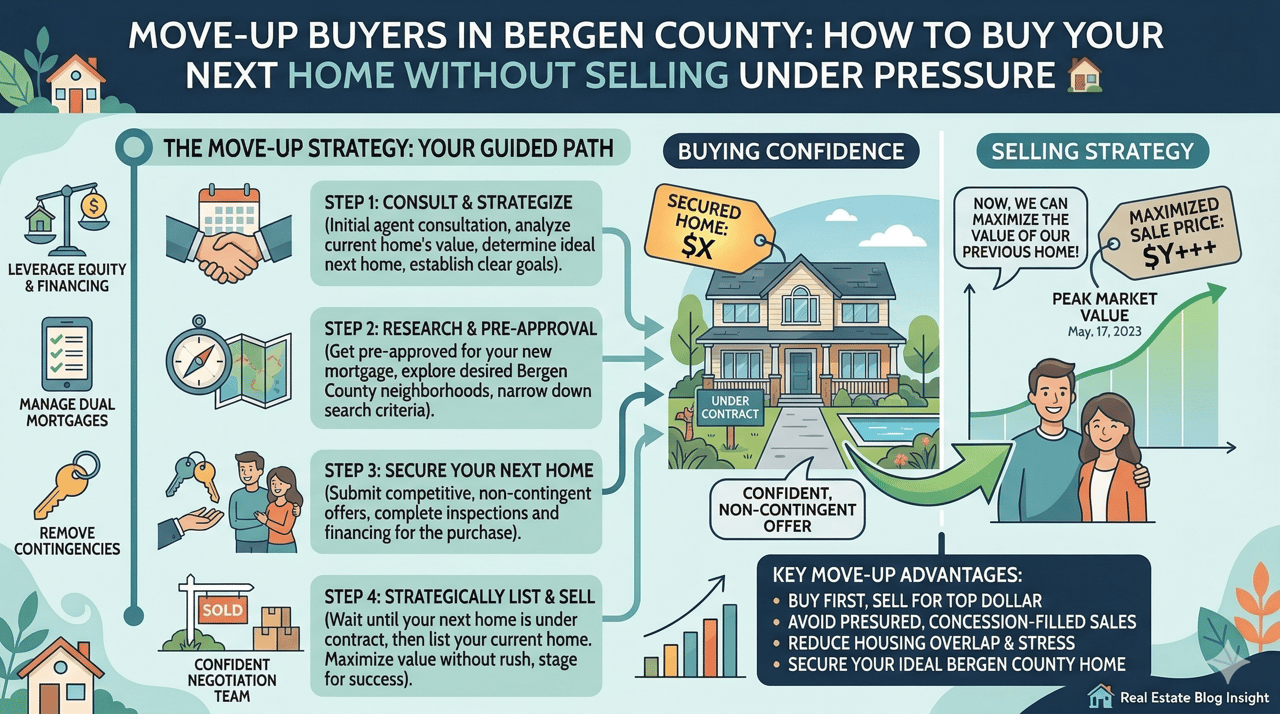
A Coordinated, Step-By-Step Approach
The most successful move-up buyers follow a clear sequence:
-
Evaluate current home value and equity
-
Prepare the home for market
-
Define purchase criteria and budget
-
Choose a timing strategy
-
Execute with flexibility and coordination
This approach reduces uncertainty and allows each step to support the next.
Final Thoughts
Moving up in today’s market is not just about finding a larger or more updated home. It is about managing timing, equity, and opportunity in a way that supports both your financial goals and your lifestyle.
In Bergen County, where market conditions can shift quickly and competition can vary by neighborhood, preparation and strategy make a measurable difference.
The goal is not to rush. It is to remove pressure.
With the right plan in place, move-up buyers can transition smoothly, make confident decisions, and position themselves for long-term success.