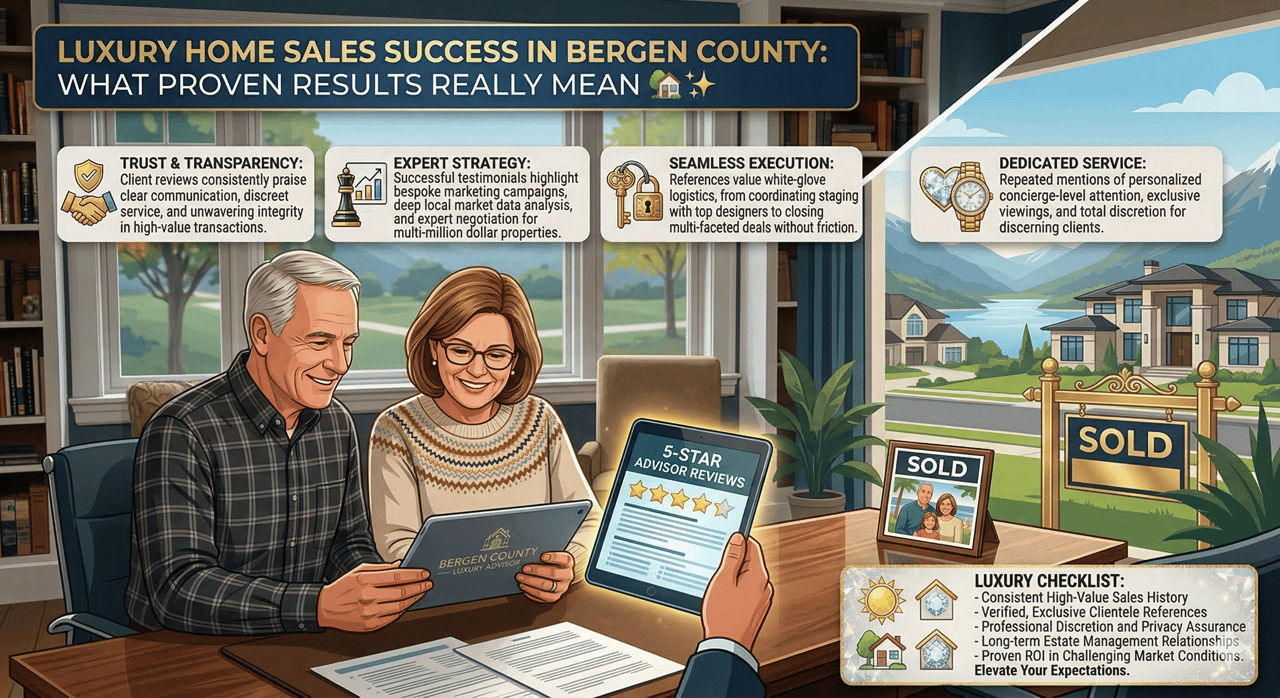
Luxury Home Sales Success in Bergen County: What Proven Results Really Mean 🏡✨
When homeowners prepare to sell a luxury property, one question often rises above all others: Who has the experience and results to position my home successfully?
Luxury real estate is not simply about higher price points. It involves strategic marketing, targeted buyer outreach, negotiation skill, and a deep understanding of hyper-local market dynamics. Reviewing a track record of sold luxury listings can offer meaningful insight into how a real estate advisor performs in competitive environments.
The Power of a Proven Sales History
A consistent history of successful luxury sales reflects more than transaction volume. It demonstrates the ability to adapt to changing market conditions, design customized marketing strategies, and guide homeowners through complex decisions.
In markets such as Northern New Jersey, where pricing can vary significantly from one neighborhood or even one street to another, experience becomes a valuable asset. A strong portfolio of sold listings shows how strategic positioning and preparation can help properties achieve compelling outcomes.
Luxury sales often require patience and precision. Unlike entry-level housing, the buyer pool is typically smaller and more selective. This means every detail matters, from pricing strategy to visual presentation and negotiation timing.
Strategic Marketing That Elevates Luxury Properties
Luxury homes benefit from marketing that goes beyond standard listing exposure. High-quality photography, video storytelling, and targeted digital promotion help capture the unique lifestyle a property offers.
Effective luxury marketing also includes direct outreach to networks of qualified buyers, private broker previews, and curated events designed to generate early interest. These strategies can create momentum and differentiate a home in a competitive environment.
In many cases, luxury buyers are not simply searching for a property. They are searching for a lifestyle fit. Communicating architectural features, location advantages, privacy elements, and long-term investment potential can influence perceived value.
Understanding Pricing Psychology in the Luxury Market
Pricing a luxury home requires a nuanced approach. Overpricing may lead to extended market time and reduced negotiating leverage. Underpricing can result in leaving meaningful equity on the table.
An experienced advisor evaluates comparable sales, buyer demand patterns, seasonal timing, and micro-location factors before recommending a strategy. Reviewing sold listings provides evidence of how pricing recommendations translate into real-world outcomes.
For example, luxury transactions across communities such as Leonia and Fort Lee have demonstrated how well-positioned homes can attract serious buyers and achieve strong results when marketing, timing, and preparation align.
Negotiation Expertise Matters at Higher Price Points
Luxury negotiations often involve multiple variables beyond price. Closing timelines, contingency structures, inspection considerations, and financing terms can all influence the final agreement.
A track record of successful closings shows the ability to manage these complexities while protecting a seller’s financial interests. Skilled negotiation can help maintain momentum, minimize risk, and support smoother transactions from contract to closing.
Local Market Knowledge Creates Competitive Advantage
In luxury real estate, hyper-local insight can make a meaningful difference. Buyers evaluating premium properties often compare lifestyle amenities, commute access, privacy levels, and long-term value potential.
Understanding these subtle market drivers allows an advisor to highlight strengths that may not be immediately obvious. Reviewing a history of sold listings across multiple neighborhoods provides confidence that a professional can navigate varying market conditions effectively.
What Sellers Should Look for in a Luxury Track Record
When evaluating luxury sales performance, homeowners benefit from focusing on patterns rather than isolated transactions. Consider questions such as:
-
Has the advisor successfully sold properties across different price ranges and property styles?
-
Do listings demonstrate thoughtful marketing presentation and positioning?
-
Is there evidence of consistent activity in key local markets?
-
Are transactions completed within reasonable timelines relative to market conditions?
These factors help reveal whether a sales history reflects repeatable strategy rather than one-time success.
The Confidence That Comes From Experience
Luxury home sales involve significant financial decisions and emotional considerations. Reviewing a proven portfolio of sold listings can provide reassurance that the advisor guiding the process understands both.
Experience working with discerning buyers and sellers often translates into calmer transactions, stronger communication, and more confident decision-making. Homeowners gain clarity not only about pricing and timing, but also about how to prepare their property to stand out.
Final Thoughts
A well-documented history of luxury home sales offers more than marketing credibility. It provides practical evidence of strategy, adaptability, and results.
For homeowners considering selling a high-value property, studying sold listings can help set realistic expectations and inspire a more thoughtful approach to planning. When pricing, presentation, and negotiation are aligned with market realities, the path to a successful sale becomes clearer.
Luxury real estate is ultimately about positioning opportunity. With the right experience and strategy in place, sellers can move forward with greater confidence and stronger outcomes.