How to Ensure All Conditions Are Met Before Closing on a Home
The final stretch before closing should feel exciting, not stressful. Yet for many buyers and sellers, this phase is where confusion, delays, and last-minute surprises tend to appear.
Closing conditions exist to protect everyone involved. When they are handled correctly, they create a smooth, predictable finish. When they are overlooked or misunderstood, they can derail a transaction.
Here is how to make sure every condition is properly addressed before closing day arrives.
What Are Closing Conditions?
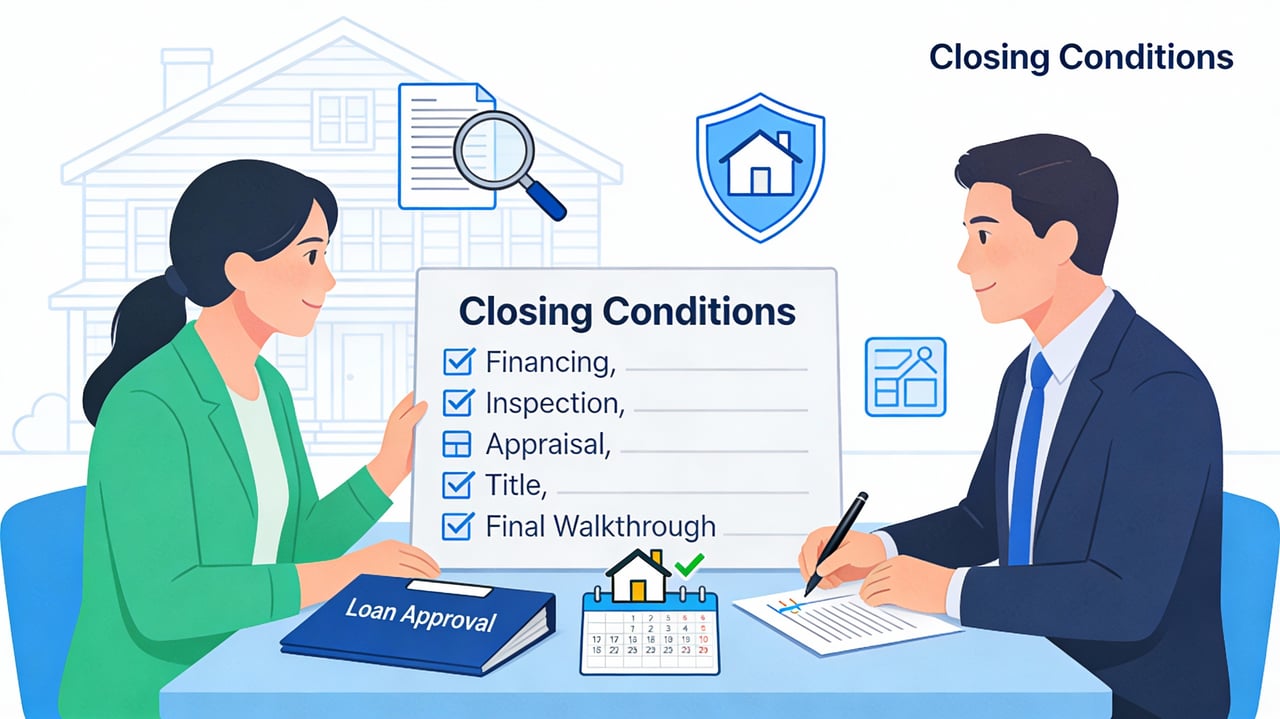
Closing conditions are specific requirements that must be satisfied before ownership of a property can officially transfer from seller to buyer.
These often include:
-
Home inspection repairs or credits
-
Appraisal requirements
-
Financing and underwriting approval
-
Title clearance
-
HOA documentation
-
Municipal inspections and certificates
-
Final walkthrough confirmations
Each condition exists for a reason. They protect the buyer’s investment, ensure legal compliance, and confirm that both sides are delivering what they agreed to.
Step One: Understand Every Condition in Writing
One of the biggest mistakes people make is assuming they understand their obligations without reviewing them carefully.
Conditions should always be:
-
Written into the contract
-
Clearly defined
-
Assigned to a responsible party
-
Tied to a deadline
If a condition feels vague, it needs clarification. Ambiguity is the enemy of smooth closings.
Step Two: Track Deadlines Religiously
Every condition has a clock attached to it.
Missed deadlines can result in:
-
Delayed closings
-
Contract disputes
-
Loss of deposits
-
Renegotiations
-
In extreme cases, cancellation
This is where experienced transaction management becomes invaluable. A good agent does not just negotiate the deal. They manage the timeline.
Step Three: Stay Proactive with Documentation
Most closing delays happen because documents arrive late or incomplete.
Common examples include:
-
Missing HOA financials
-
Incomplete repair receipts
-
Unverified lien releases
-
Unsubmitted lender forms
-
Outdated insurance binders
The earlier these items are gathered, the fewer surprises you will face later.
Step Four: Address Repairs and Credits Early
Inspection-related conditions often become the biggest sticking point.
If repairs are required, you should:
-
Define exactly what needs to be done
-
Set clear completion deadlines
-
Keep receipts and documentation
-
Confirm access for re-inspection if needed
If a credit is being issued instead of repairs, make sure it is clearly reflected in the closing statement.
Step Five: Verify Financing and Appraisal Status
From the buyer’s side, financing conditions are critical.
You should confirm:
-
Final underwriting approval
-
Clear-to-close status
-
Appraisal acceptance
-
Loan terms match what you agreed to
Do not assume your lender will automatically update everyone. Communication is key.
Step Six: Conduct a Meaningful Final Walkthrough
The final walkthrough is not a formality. It is your last chance to confirm that:
-
The property is in agreed-upon condition
-
Repairs were completed
-
No new damage occurred
-
Fixtures and appliances remain
-
The home is vacant if required
If something is wrong, it must be addressed before closing, not after.
Step Seven: Work With Professionals Who Track the Details
The reality is this: most closing problems are preventable.
They happen when no one is actively managing the moving pieces.
A strong real estate professional coordinates between:
-
Attorneys
-
Lenders
-
Inspectors
-
Title companies
-
Municipal offices
-
HOA boards
-
Buyers and sellers
This coordination is what transforms chaos into a calm, predictable process.
Why This Matters More Than Ever
In today’s market, delays cost money, create stress, and can sometimes kill deals entirely.
Being prepared does not mean being paranoid. It means being informed.
The smoother your closing, the more confident you will feel walking into your next chapter.
About Scott Selleck
Scott Selleck is a real estate broker with over 32 years of experience serving Bergen and Hudson County, NJ. As an AI-certified agent with The Selleck Group at Keller Williams City Views Realty, Scott specializes in helping families navigate complex real estate decisions with clarity and confidence.
The Selleck Group at Keller Williams City Views Realty
Fort Lee, NJ
📞 201-970-3960
📧 [email protected]
🌐 www.SelleckSellsNJ.com
Thinking about selling in Bergen or Hudson County, or planning a relocation to Florida? Contact Scott for a complimentary market analysis and strategic consultation.
Ready to Work with Scott Selleck?
Scott Selleck | Real Estate Broker
Serving Bergen and Hudson County, NJ with 32+ years of experience
-
Email: [email protected]
-
Cell: 201-970-3960
-
Office: 201-592-8900